Home › Insurance and water damage
Does homeowners insurance cover water damage?
Usually yes for water that arrives suddenly and by accident, such as a burst pipe, and usually no for water that arrived slowly. The Texas Department of Insurance puts it in one sentence: “Most homeowner and renters policies cover sudden and accidental water damage.” Gradual leaks, seepage, floods and most mold sit on the other side of that line.
The rule: sudden and accidental, yes; gradual, no
The Texas Department of Insurance, the state's insurance regulator, writes the consumer version of the rule without hedging. Covered: “Most homeowner and renters policies cover sudden and accidental water damage.” Its examples are “a burst pipe, toilet overflow, or broken washer hose.” Not covered: “Most home policies don't cover water damage from gradual leaks or seepage, and that includes damage from mold.”
Source: TDI, When are water damage and mold covered by insurance? (last updated 4/24/2025), accessed 2026-09-17.
The national policy forms say the same thing in longer words. The Insurance Information Institute's list of perils covered by the standard broad forms includes “Accidental discharge or overflow of water or steam from within a plumbing, heating, air conditioning, or automatic fire-protective sprinkler system, or from a household appliance”, “Freezing of a plumbing, heating, air conditioning or automatic, fire-protective sprinkler system, or of a household appliance”, and “Sudden and accidental tearing apart, cracking, burning, or bulging of a steam or hot water heating system.”
Source: Insurance Information Institute, Which disasters are covered by homeowners insurance?, accessed 2026-09-17.
Read those three perils again and notice what they have in common. Each names an event with a moment: a discharge, a freeze, a crack. None of them describes a condition. That is the whole test. The same gallon of water is covered if a pipe burst on Tuesday and excluded if the pipe has been weeping behind the wall since spring, because the second one is maintenance, and maintenance is the homeowner's job under every standard form.
What type of water damage is not covered?
Four kinds of water damage sit outside most policies, and three of them are named in the regulator's own guidance.
- Gradual leaks and seepage. The Texas Department of Insurance: “Most home policies don't cover water damage from gradual leaks or seepage, and that includes damage from mold.” A slow drip under a sink, a foundation that has been damp for a season, a roof that has let water through several storms.
- Flood. Water rising from outside is a separate policy. The National Flood Insurance Program: “Most homeowners insurance does not cover flood damage.” The Insurance Information Institute: “Floods are not covered under homeowners and renters policies. Only a specific flood insurance policy will cover home flood related losses.”
- Sewer and drain backup. The Insurance Information Institute: “Sewer backups are not covered under a typical homeowners insurance policy, nor are they covered by flood insurance.” Some companies sell it as an endorsement; the Texas Department of Insurance notes that “Some policies cover water or sewage from outside your house that enters through sewers or drains.”
- Mold beyond the covered item. The Institute lists mold among the maintenance-related problems a policy leaves to the homeowner. The Texas regulator is more specific about where the line falls, and that gets its own section below.
Sources: TDI, When are water damage and mold covered by insurance? · Floodsmart (NFIP) · III, Facts about flood insurance · III, Which disasters are covered by homeowners insurance? · TDI, FAQ: Homeowners insurance and disaster claims. All accessed 2026-09-17.
Is mold from water damage covered?
Only as far as the water that caused it was covered, and often not all the way. The Texas Department of Insurance says that when a sudden, accidental event damages an item and mold develops on it, the mold on that item is part of the covered loss. Then it draws the limit: “Most home policies don't include mold cleanup and testing after a damaged item is removed.” The remedy it offers is an add-on: “Your insurance company may let you add coverage for cleanup caused by a covered loss.”
Two other lines close the door on the common cases. Mold from a slow leak follows the leak: gradual, excluded, “and that includes damage from mold.” Mold after a flood follows the flood: “Mold from a flood would not be covered because home policies don't cover floods. You would need to add it to your policy or buy a separate flood policy.”
Sources: TDI, When are water damage and mold covered by insurance? · TDI, FAQ: Homeowners insurance and disaster claims. Accessed 2026-09-17.
What that means in practice: the mold section of your policy, and any mold endorsement with its own dollar cap, is the part to read before you hire anyone. Whether the mold itself needs a professional is a separate question with a public answer, and it is not the insurer's to give. The EPA's size thresholds are quoted on our page on whether you actually need mold remediation, and what the work costs at each scope is on the remediation cost page.
How long after water damage can you claim?
The public guidance does not give a number of days, and we will not invent one. What the Texas Department of Insurance says is to report the loss to your company promptly. The practical reason is that a leak reported the week it happens looks like a sudden event, and the same leak reported months later looks like a gradual one. Time is evidence, and it runs against you.
The deadlines that do exist are written into your policy under headings like “Duties after loss” and, in some states, into statute. Read the policy's notice requirement; it is usually a short paragraph. One concrete timeline the Texas regulator does publish concerns the check, not the claim: when a settlement is sent to your mortgage company, “The mortgage company must get in touch with you within 10 days” and “it has 10 days to send you the check.”
Sources: TDI, When are water damage and mold covered by insurance? · TDI, FAQ: Homeowners insurance and disaster claims (updated 9/15/2025). Accessed 2026-09-17.
What to do in the first hours, because it decides the claim
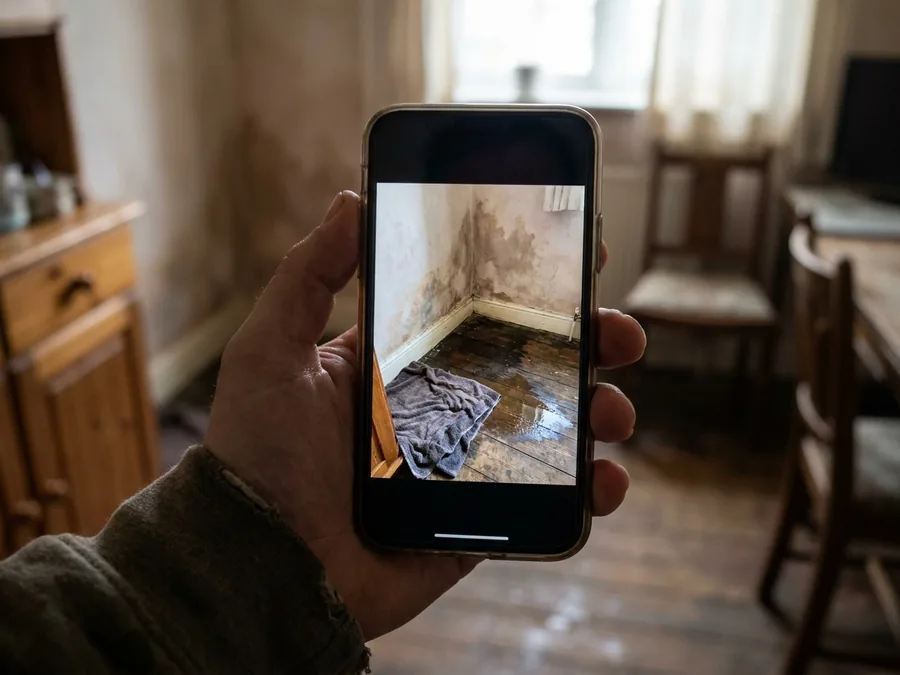
The same actions protect the claim and stop the mold, and the order is the same for both. From the Texas regulator's guidance and the CDC's cleanup tips:
- Stop the water. Texas Department of Insurance: “Stop the water flow or leak as soon as you can.” Shut the valve, cover the roof, whatever it takes.
- Photograph everything before you touch it. The regulator's instruction is blunt: “take pictures of the damage before doing any work.” The standing water, the wet materials, the source. These photos are the difference between a documented sudden event and an argument.
- Dry it, and start now. Texas Department of Insurance: “Remove pools of water and start drying the area.” The clock on this is the mold clock. EPA: “It is important to dry water-damaged areas and items within 24-48 hours to prevent mold growth.” CDC: “Dry your home and everything in it as quickly as possible – within 24 to 48 hours if you can.”
- Temporary repairs only. “It's generally OK to make temporary repairs. Don't make permanent repairs until you've talked to your insurance company.” Keep the receipts; the policy generally covers the materials and labour for the temporary work.
- Report it. Promptly, in the regulator's word, and in writing if your policy asks for it.
Sources: TDI, When are water damage and mold covered by insurance? · TDI, FAQ: Homeowners insurance and disaster claims · EPA, A Brief Guide to Mold, Moisture and Your Home · CDC, 8 Tips to Clean Mold. All accessed 2026-09-17.
Step three is where a claim and a mold problem part ways. Drying within two days is what keeps the loss a water loss. Past that window the federal guidance says to assume mold, and mold is the part of the loss the policy is least likely to pay for. What the window actually means, hour by hour, is on our page on mold after water damage; what the drying and repair work should cost is on the water damage restoration cost page.
Why would insurance deny a water damage claim?
We list only the reasons the Texas Department of Insurance names or implies in its own guidance. Adjusters have others, and your policy has the full list.
- The damage was gradual. The most common reason and the one the regulator states outright: “Most home policies don't cover water damage from gradual leaks or seepage.” Staining, rot, corrosion and mold that clearly took weeks to form are the evidence an adjuster reads.
- It was a flood, and there was no flood policy. “Mold from a flood would not be covered because home policies don't cover floods.” The same is true of the water itself.
- It was a sewer or drain backup with no endorsement. Not covered under a typical policy, per the Insurance Information Institute, unless the endorsement was bought.
- The claim is for mold work the policy does not include. “Most home policies don't include mold cleanup and testing after a damaged item is removed.”
Sources: TDI, When are water damage and mold covered by insurance? · TDI, FAQ: Homeowners insurance and disaster claims · III, Which disasters are covered by homeowners insurance?. Accessed 2026-09-17.
Flood is a different policy
The word does a lot of work in this subject, so it is worth being exact. In insurance, a flood is water that rises or flows in from outside the building: a river, a storm surge, runoff, rising groundwater. A pipe that bursts and puts two inches of water on the kitchen floor is not a flood, however it looks; it is the sudden, accidental discharge the standard policy covers.
For the real thing, the federal program that writes most flood policies is direct: “Most homeowners insurance does not cover flood damage.” And the assumption that only mapped high-risk areas need it does not hold up against its own claims data: “Almost one-third of NFIP flood insurance claims come from OUTSIDE high-risk flood areas.”
Source: Floodsmart, the National Flood Insurance Program, accessed 2026-09-17.
If your water came from outside, the homeowners policy is the wrong document to be reading. If it came from inside, the question is only whether it was sudden.
Common questions
Does homeowners insurance cover water damage from rain or a roof leak?
It depends on how the water got in, not on the fact that it rained. Rain that enters through storm damage to the roof is the sudden, accidental kind of event most policies cover. Rain that has been coming through a worn roof for months is the gradual kind the Texas Department of Insurance says most policies exclude: “Most home policies don't cover water damage from gradual leaks or seepage, and that includes damage from mold.”
Your policy's exclusions section is where the answer for your roof lives. Source: TDI, When are water damage and mold covered by insurance?, accessed 2026-09-17.
Does homeowners insurance cover water damage from a sewer backup?
Usually not by default. The Insurance Information Institute states: “Sewer backups are not covered under a typical homeowners insurance policy, nor are they covered by flood insurance.” The Texas Department of Insurance adds that “Some policies cover water or sewage from outside your house that enters through sewers or drains.”
So it is an endorsement question: look for a sewer or drain backup endorsement on your declarations page, and if it is not there, assume it is not covered. Sources: III, Which disasters are covered by homeowners insurance? · TDI, FAQ: Homeowners insurance and disaster claims. Accessed 2026-09-17.
Is water damage in a basement covered?
The room does not decide it; the source does. A burst pipe or a failed water heater in the basement is the sudden, accidental event most policies cover. Groundwater seeping through the foundation is the gradual kind most policies exclude, and water rising from outside is a flood, which the National Flood Insurance Program says most homeowners insurance does not cover. Basements collect all three, so name the source before you call it in.
Does renters insurance cover water damage?
The Texas Department of Insurance groups the two together: “Most homeowner and renters policies cover sudden and accidental water damage.” A renters policy covers your belongings, not the building, so the wet drywall is the landlord's claim and the wet furniture is yours. The same sudden-versus-gradual line applies to both.
Source: TDI, When are water damage and mold covered by insurance?, accessed 2026-09-17.
Should I file a claim for water damage?
This page cannot answer that for you, and neither can anyone who has not read your policy. What the sources do say: report promptly, photograph everything before you touch it, and make only temporary repairs until the company has talked to you. Whether a claim is worth your deductible and any premium effect is a question for your policy and your agent; no public source we cite puts a number on it.
How much does homeowners insurance pay for water damage?
Whatever your policy's limits, deductible and endorsements say, and nothing on this page can read those for you. The Texas Department of Insurance notes one limit worth knowing in advance: “Most home policies don't include mold cleanup and testing after a damaged item is removed.” Some companies let you add that coverage. Read the mold and water sections of your policy before the loss, not after.
Source: TDI, When are water damage and mold covered by insurance?, accessed 2026-09-17.
Is this page about Texas only?
The primary source is the Texas Department of Insurance, the state regulator, because Texas is where this site's licensing data lives. The sudden-versus-gradual rule it describes is how standard policy forms work across the country, and the Insurance Information Institute's national list of covered perils says the same thing. But coverage is set by the policy in your hand, not by a regulator's summary. Outside Texas, read your policy and your own state's insurance department page.