Home › Mold after water damage
Mold after water damage: what the 24 to 48 hour window means
The EPA and FEMA agree on the number: mold can start growing on wet material within 24 to 48 hours. Inside that window, drying is the whole job and most people can do it. Past it, the agencies say to assume growth, throw out what cannot be dried, and treat a flood, sewage or a large area as professional work.
How fast does mold grow after water damage?
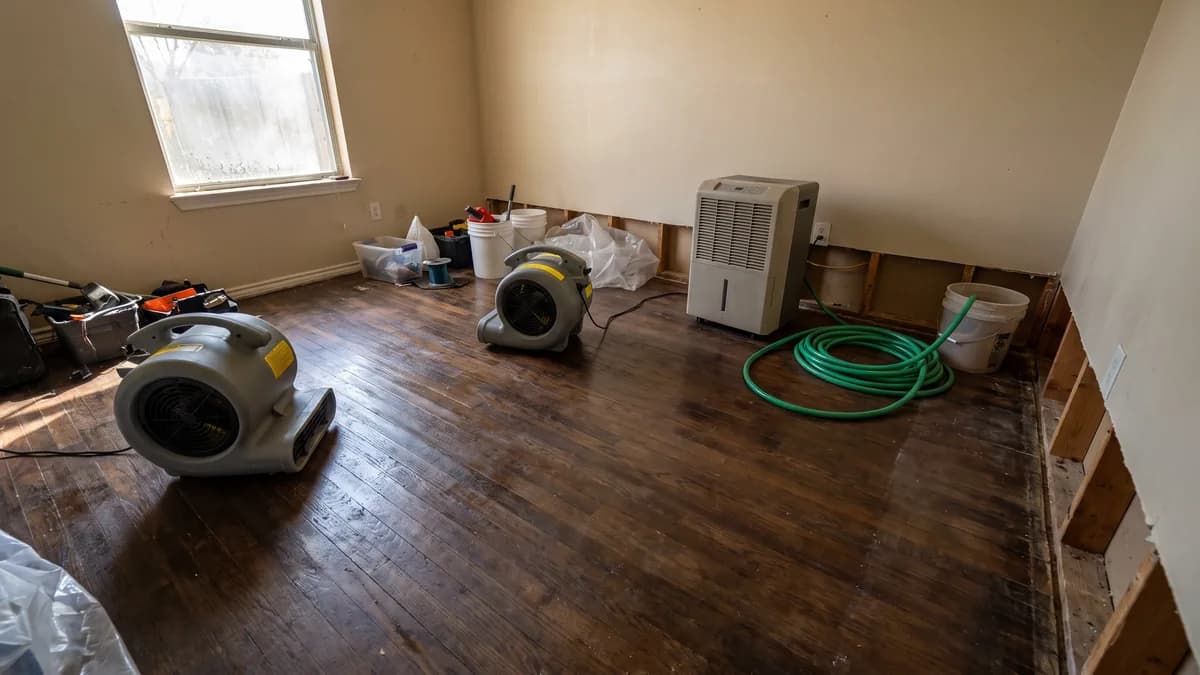
Two federal sources, same figure. The EPA: “It is important to dry water-damaged areas and items within 24-48 hours to prevent mold growth.” The same guide states the other half of the rule, the part that should lower your pulse: “If wet or damp materials or areas are dried 24-48 hours after a leak or spill happens, in most cases mold will not grow.”
FEMA's flood brochure puts it the same way: “Mold growths, or colonies, can start to grow on a damp surface within 24 to 48 hours.” The brochure's list of water sources is broader than a flood: sewage back-up, plumbing or roof leaks, a damp basement or crawl space, sink and bathtub overflows, and high indoor humidity from cooking, dryer vents and humidifiers. A dishwasher hose counts. A bathtub that overflowed counts.
Sources: EPA, A Brief Guide to Mold, Moisture and Your Home · FEMA, Dealing With Mold & Mildew in Your Flood Damaged Home. Accessed 2026-09-17.
The window is a deadline for drying. The material has to stay wet for the clock to run. A cabinet floor that was mopped and fanned dry the same evening is a different situation from a wall cavity that took on water on Friday and was opened on Tuesday. The question for every wet item is the same: was it dry within two days, or not.
How to tell if you have mold after water damage
Look, and smell, in that order. CDC keeps the test simple: “Mold can look like spots of many different colors, and it can smell musty. If you see or smell mold, you should remove it.” And on the question that stalls most homeowners, the type: “You do not need to know the type of mold.”
The complication after a leak is that the wettest material is often the material you cannot see. The EPA: “Mold may be hidden in places such as the back side of dry wall, wallpaper, or paneling, the top side of ceiling tiles, the underside of carpets and pads, etc.” Water travels down and sideways, into the pad under the carpet and the paper facing on the back of the drywall. A dry-looking wall two days after a leak can be wet behind the paint.
Sources: CDC, Mold (page dated September 26, 2024) · EPA, A Brief Guide to Mold, Moisture and Your Home. Accessed 2026-09-17.
The honest check is a moisture reading, a look behind the baseboard, or a hand on the underside of the carpet, rather than a glance at the paint. If those come back wet past the window, the joint EPA/CDC/FEMA guide tells you what to conclude: “Was your home flooded? If so, and you were not able to dry your home (including furniture and other items) within 24-48 hours, you should assume you have mold growth.”
Source: Homeowner's and Renter's Guide to Mold Cleanup after Disasters (EPA/CDC/FEMA/HUD/NIH), accessed 2026-09-17.
What to do in the first 48 hours
The CDC publishes an eight-point list for exactly this situation. The four that matter most in the first two days, in the agency's words:
- Get the water out. From the joint disaster guide: “Remove standing water and wet materials. Use a wet vacuum to remove water from floors, carpets, and hard surfaces. Dry your home and everything in it as quickly as you can – within 24 to 48 hours if you can.”
- Move air, with one caveat. CDC: “Use fans and dehumidifiers to remove moisture”. FEMA adds the exception: use fans “unless mold has already started to grow (fans may spread existing mold).” If you can already see growth, dry with dehumidifiers and open windows, and leave the box fan off.
- Leave the furnace and AC alone if the ducts got wet. FEMA: “Use the furnace only if the ducts have not been inundated (any forced air central heating ducts that have come in contact with water or mold should be professionally checked).” The EPA's version applies to any suspected contamination: “Do not run the HVAC system if you know or suspect that it is contaminated with mold - it could spread mold throughout the building.”
- Do not paint over it. CDC: “Painting or caulking over mold will not prevent mold from growing”. The stain-blocking primer on a water-marked ceiling hides the evidence and leaves the problem.
Sources: CDC, 8 Tips to Clean Mold (page dated March 29, 2024) · Homeowner's and Renter's Guide to Mold Cleanup after Disasters · FEMA mold brochure · EPA, A Brief Guide to Mold, Moisture and Your Home. Accessed 2026-09-17.
One more line from the same CDC page, because the two products it names are both in most garages: “Do not mix bleach and ammonia because it can create toxic vapors”. The EPA says the same thing about any ammonia-containing cleaner.
If insurance is going to be involved, photograph everything before you move it. The order of operations on the claim side is on our insurance page, and it starts with the same two steps: stop the water, start drying.
What to throw away and what to keep
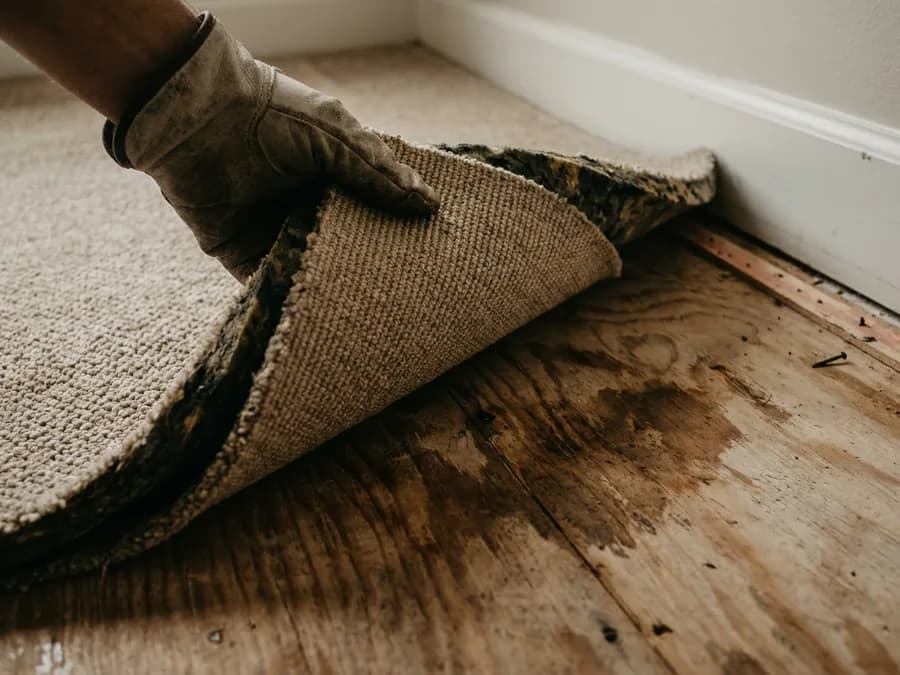
The rule is porosity plus time. The EPA: “Absorbent or porous materials, such as ceiling tiles and carpet, may have to be thrown away if they become moldy.” The CDC draws the line at the window: “Anything that was wet with flood water and can't be cleaned and dried out completely within 24 to 48 hours should be taken outside.”
FEMA is blunter about the single item people most want to save: “Remove all wet items such as furniture, rugs, bedding, toys, and carpeting. Discard soaked or moldy carpeting!” CDC lists the same category of things, the ones that cannot be cleaned or dried quickly: mattresses, carpet and padding, rugs, upholstered furniture, pillows, foam items, stuffed toys, books, paper products and wall coverings.
Sources: EPA, A Brief Guide to Mold, Moisture and Your Home · CDC, 8 Tips to Clean Mold · FEMA mold brochure. Accessed 2026-09-17.
What stays is what is hard and non-porous: tile, sealed concrete, metal, solid wood that dried in time, glass. Those get the CDC treatment, “Clean with water and a detergent. Remove all mold you can see. Dry right away.” The expensive middle ground is drywall and subfloor. Drywall that was wet from a clean-water leak and dried inside two days is usually kept. Drywall that wicked water for a week, or that took on sewage, is cut out. That judgment is where a contractor earns a fee, and it is also where scope creep lives, which is why the cost page separates drying from rebuilding.
Water damage vs mold: which problem you actually have
They are one problem at two stages. Water damage is the cause. Mold is what the cause produces when it is left alone for two days. The EPA's sentence on this is the most useful test to apply to anyone who quotes you: “If you clean up the mold, but don't fix the water problem, then, most likely, the mold problem will come back.”
The first question is whether the water is still coming in. A stain on the ceiling under a bathroom is a plumbing job with a drywall patch attached. A musty crawl space is a drainage or ventilation job that happens to be growing mold. Fix the water, then dry, then decide whether what is left needs anyone at all. Our page on whether you need remediation walks the EPA's size thresholds for that last step.
Source: EPA, A Brief Guide to Mold, Moisture and Your Home, accessed 2026-09-17.
When water damage becomes a professional job
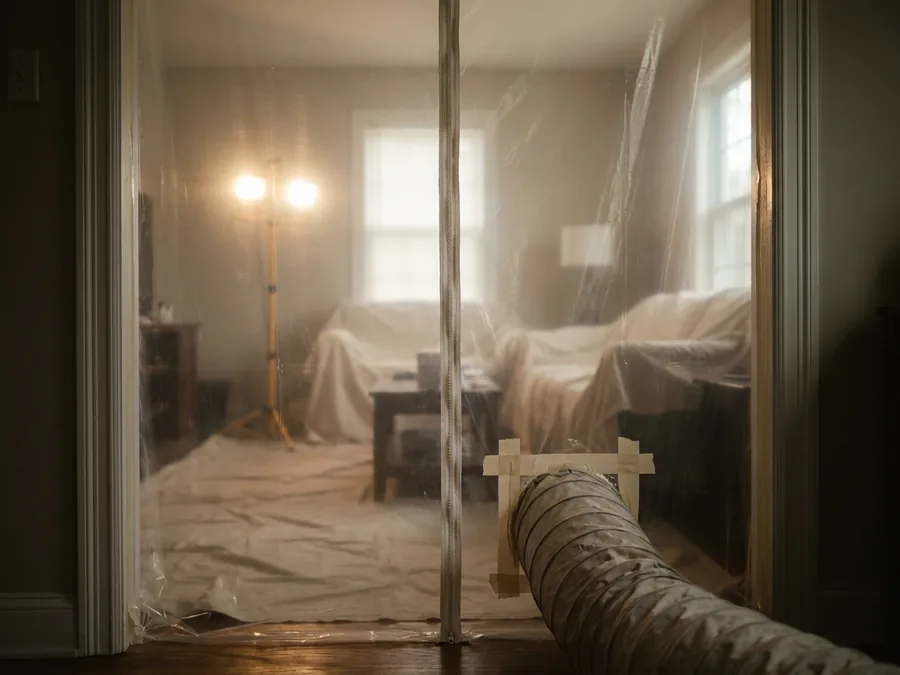
The same agencies that tell you to dry a small leak yourself also draw lines past which they stop saying that. Four of them, in their words.
- The water was dirty. EPA: “If the water and/or mold damage was caused by sewage or other contaminated water, then call in a professional who has experience cleaning and fixing buildings damaged by contaminated water.” Sewer backups, toilet overflows from beyond the trap, and rising floodwater are the usual cases.
- There was a lot of water, or a lot of mold. EPA: “If there has been a lot of water damage, and/or mold growth covers more than 10 square feet, consult EPA's Mold Remediation in Schools and Commercial Buildings.” That document is written for professionals, which is the point.
- The ducts got wet. FEMA's line above: ducts that contacted water or mold “should be professionally checked”.
- The house flooded and stayed wet. The joint guide's instruction once the 24 to 48 hours have passed: “You need to completely dry everything, clean up the mold, and make sure you don't still have a moisture problem.” On a whole floor of a house, that is equipment and days of work.
Sources: EPA, A Brief Guide to Mold, Moisture and Your Home · FEMA mold brochure · Homeowner's and Renter's Guide to Mold Cleanup after Disasters. Accessed 2026-09-17.
FEMA's own brochure uses a square-footage flowchart: under 25 square feet, follow the booklet; over 25, consult a professional contractor. Texas draws its licensing line at the same number. TDLR: “Please note that in most instances, areas of visible mold of less than 25 contiguous square feet can be cleaned up by people who are not licensed.” Above it, the mold work needs a state license, and the company can be checked in the register before anyone starts.
Sources: FEMA mold brochure · TDLR, Mold Assessors and Remediators FAQs. Accessed 2026-09-17.
Two different trades can show up for this. Water mitigation is extraction and drying, measured with meters and logged by the day. Mold remediation is containment and removal of what grew. On a fresh loss the first is what you need now; the second is what you may need in a week, and only if the drying failed. What each should cost, by scope and with dated sources, is on the water damage cost page and the mold remediation cost page.
Is mold from water damage dangerous?
We answer this only in the CDC's words and then stop: “People with asthma or who are allergic to mold may have severe reactions. Immune-compromised people and people with chronic lung disease may get infections in their lungs from mold.” Whether that describes anyone in your home is a question for a clinician, not for a website and not for a contractor. Nothing on this page diagnoses anything.
Source: CDC, Mold (page dated September 26, 2024), accessed 2026-09-17.
Does insurance cover mold from water damage?
Sometimes, and the deciding word is sudden. The Texas Department of Insurance: “Most homeowner and renters policies cover sudden and accidental water damage.” Its examples are “a burst pipe, toilet overflow, or broken washer hose”. The exclusion is just as plain: “Most home policies don't cover water damage from gradual leaks or seepage, and that includes damage from mold.” And floods are their own policy: “Mold from a flood would not be covered because home policies don't cover floods.”
Source: Texas Department of Insurance, When are water damage and mold covered by insurance? (last updated 4/24/2025), accessed 2026-09-17.
The sudden-versus-gradual line, what the mold sub-limits look like, and why the first 48 hours decide the claim as well as the mold are on our insurance page.
Common questions
What kills mold from water damage?
Detergent, water and drying, per the CDC: “Clean with water and a detergent. Remove all mold you can see. Dry right away.” Bleach is not the default. The EPA states that “The use of a chemical or biocide that kills organisms such as mold (chlorine bleach, for example) is not recommended as a routine practice during mold cleanup.”
Whatever you use, the water source has to be fixed or the mold returns. Sources: CDC, 8 Tips to Clean Mold · EPA, A Brief Guide to Mold, Moisture and Your Home. Accessed 2026-09-17.
Can mold grow back after remediation?
Yes, if the water is still getting in. The EPA puts it in one sentence: “If you clean up the mold, but don't fix the water problem, then, most likely, the mold problem will come back.” After a leak or a flood, the fix is the plumbing, the roof or the drainage. The cleanup is the second job.
Should I test for mold after water damage?
Usually not. The EPA's position is that “In most cases, if visible mold growth is present, sampling is unnecessary.” If materials stayed wet past the 24 to 48 hour window, the agencies say to assume growth and act on it, which makes a test a delay rather than a decision.
Testing earns its fee when you can smell mold and cannot find it. When testing is worth paying for.
How long does mold take to grow on wood, drywall or concrete?
The agencies give one window regardless of material: 24 to 48 hours of wetness. FEMA's brochure lists what mold grows on rather than timing each surface: “wood products, ceiling tiles, cardboard, wallpaper, carpets, drywall, fabric, plants, foods, insulation, decaying leaves and other organic materials.” Bare concrete is not on that list, but the dust and paint on it, and the drywall or carpet sitting against it, are.
Is it black mold?
Color does not change what you do. CDC states: “It is not necessary to determine what type of mold you may have growing in your home or other building. All molds should be treated the same with respect to potential health risks and removal.” Dry it, remove what is moldy, fix the water.
What CDC actually says about black mold. Source: CDC, Facts About Stachybotrys chartarum, accessed 2026-09-17.
Can I prevent mold after water damage?
Yes. The method is drying. CDC: “Dry your home and everything in it as quickly as possible – within 24 to 48 hours if you can” and “Use fans and dehumidifiers to remove moisture”. FEMA adds one caution on fans: use them “unless mold has already started to grow (fans may spread existing mold).” Anything that cannot be dried in that window goes outside.