Home › Water damage restoration cost
What water damage restoration should cost
Three published guides, three different bands. HomeAdvisor: most homeowners spend $1,383–$6,369, average $3,868 (updated Jun 17, 2026). HomeGuide: $2,000–$6,000 (2026). Fixr: $1,200–$5,000, average $3,000 (updated January 31, 2025). The spread is the water category, and whether the number covers drying only or the rebuild too.
One distinction before the numbers, because it explains most of the disagreement between quotes. Mitigation is getting the water out and the structure dry: extraction, fans, dehumidifiers, moisture readings. Rebuild is replacing what the water ruined: drywall, flooring, cabinets, paint. Some quotes price the first, some price both, and a homeowner comparing one of each is comparing two different jobs.
The national bands, side by side
Every figure below is a published range with its date, not our estimate. Where the guides disagree, all of them are shown.
| Source | Typical range | Average | Low / high |
|---|---|---|---|
| HomeAdvisor (updated Jun 17, 2026) | $1,383–$6,369 | $3,868 | “This project can cost anywhere from $450 to $16,000” |
| HomeGuide (2026) | $2,000–$6,000 | Not stated | “as little as $150 or as much as $100,000, depending on the volume of water and severity of damage” |
| Fixr (updated January 31, 2025) | $1,200–$5,000 | $3,000 | $350 for “a simple remediation caused by an overflowing toilet”; $50,000 for “black water extraction in a basement, complete dry out and cleanup, and drywall and hardwood flooring replacement due to a sewer backup” |
Sources: HomeAdvisor, water damage restoration cost (updated Jun 17, 2026) · HomeGuide, water damage restoration cost (2026) · Fixr, water damage restoration cost (updated January 31, 2025). All accessed 2026-09-17.
Read the low and high ends as a description of what the job can be, not as a negotiating range. Fixr's own low example is a toilet overflow; its high example is a sewer backup that took the basement flooring with it. The $50,000 job and the $350 job share a category name and nothing else, which is why the first thing to establish about any quote is what kind of water it was.
Cost per square foot by water category
The industry prices water by how contaminated it is, using three categories from the ANSI/IICRC S500 standard (5th edition, 2021). In our words: Category 1 is water from a sanitary source, a supply line or a rain leak through the roof. Category 2 is water carrying significant contamination, a dishwasher or washing-machine discharge. The standard's own definition of Category 3 is water that is “grossly contaminated” and “can contain pathogenic, toxigenic or other harmful agents and can cause significant adverse reactions to humans if contacted or consumed.” Sewage and rising floodwater are the usual examples.
One point the standard's own consensus body made in March 2026: “Top-down water ingress, wind-driven rain and water from weather related events are not automatically considered Category 3 Water.” A roof leak in a storm is not sewage, and should not be priced as if it were unless an inspection finds gross contamination.
Source: ANSI/IICRC S500 Consensus Body Position Statement, Category of Water Damage and Weather-related Events (March 16, 2026; citing the 5th Edition ANSI/IICRC S500, 2021), accessed 2026-09-17.
| Category | HomeAdvisor | Fixr | HomeGuide |
|---|---|---|---|
| Category 1 (clean) | $3.50 | $3.75–$4.25 | $4–$12 all categories |
| Category 2 (gray) | $5.25 | $4.10–$6.50 | |
| Category 3 (black) | $7.50 | $7–$7.50 |
Sources: HomeAdvisor: “You can expect to pay between $3.50 and $7.50 per square foot, depending on the water category” (updated Jun 17, 2026) · Fixr (updated January 31, 2025) · HomeGuide: “Removing water and drying the area costs $4 to $12 per square foot” (2026). All accessed 2026-09-17.
These rates meter extraction and drying only. HomeAdvisor says so directly for black water: it “costs around $7 to $7.50 per square foot to remove black water from the home, but this price doesn't include repairing and replacing infected items.” Multiply the rate by the wet area and you have the mitigation line. Everything the water ruined is on top.
HomeAdvisor also publishes a second scale, by class, which describes how much of the structure absorbed water rather than how dirty it was: Class 1 $150–$400, Class 2 $500–$1,000, Class 3 $1,000–$3,000, Class 4 $20,000–$100,000. Class 4 is the long-standing-water case, which HomeAdvisor ties to river flooding or storm surge. A quote should name both the category and the class; a quote that names neither has not told you what it is pricing.
What does water damage restoration include?
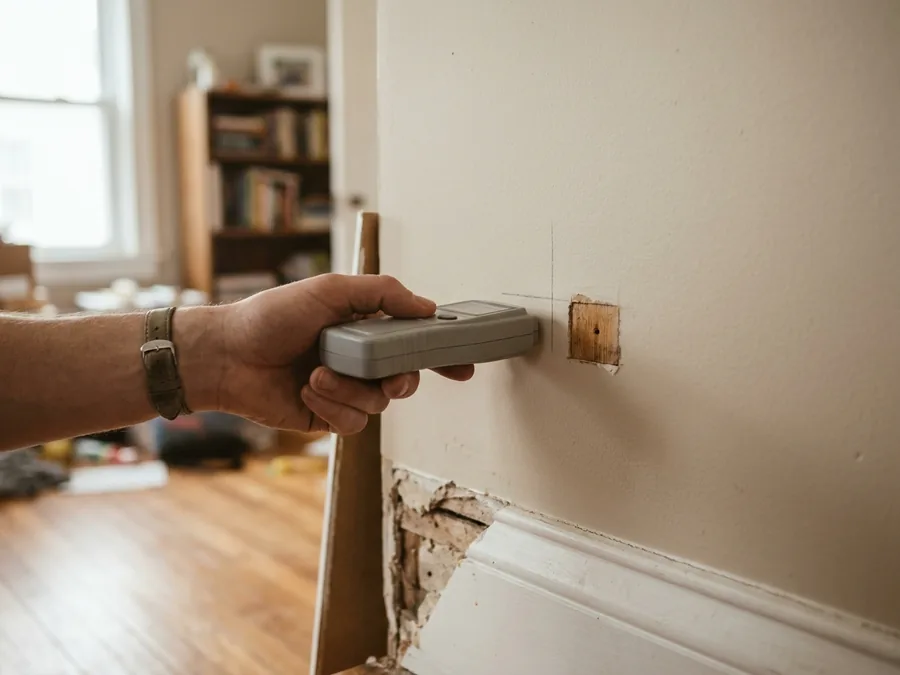
A complete scope has two halves, and a homeowner should be able to see the seam between them on the quote.
- Mitigation. Extracting standing water, removing wet materials that will not dry, setting fans and dehumidifiers, and logging moisture readings until the structure is dry. This is the per-square-foot line above. The drying log is the deliverable: without one there is no evidence the job is finished.
- Rebuild. Replacing drywall, subfloor, flooring, trim and paint. This is priced by material and by area, and it is where two quotes for the same house can differ by thousands, because one contractor replaces a wall and another replaces the wet 2 feet of it.
- The source. The pipe, the roof, the appliance hose. Usually another trade, usually a separate line, and usually the reason the water damage happened. Ask who is fixing it, because until it is fixed the drying is temporary.
Labour is quoted by the hour in some markets. Fixr: “Companies specializing in water damage restoration typically charge between $70 and $200 per hour, depending on the water type, damage extent, and affected parts.” Fixr also lists an emergency call-out fee of $50 to $200 and notes that having a crew out quickly can add $100 to $200. Those fees are real and are worth paying when materials are still wet; they are not worth paying on a leak that stopped last month.
Source: Fixr, water damage restoration cost (updated January 31, 2025), accessed 2026-09-17.
Ceiling, drywall and floor repair
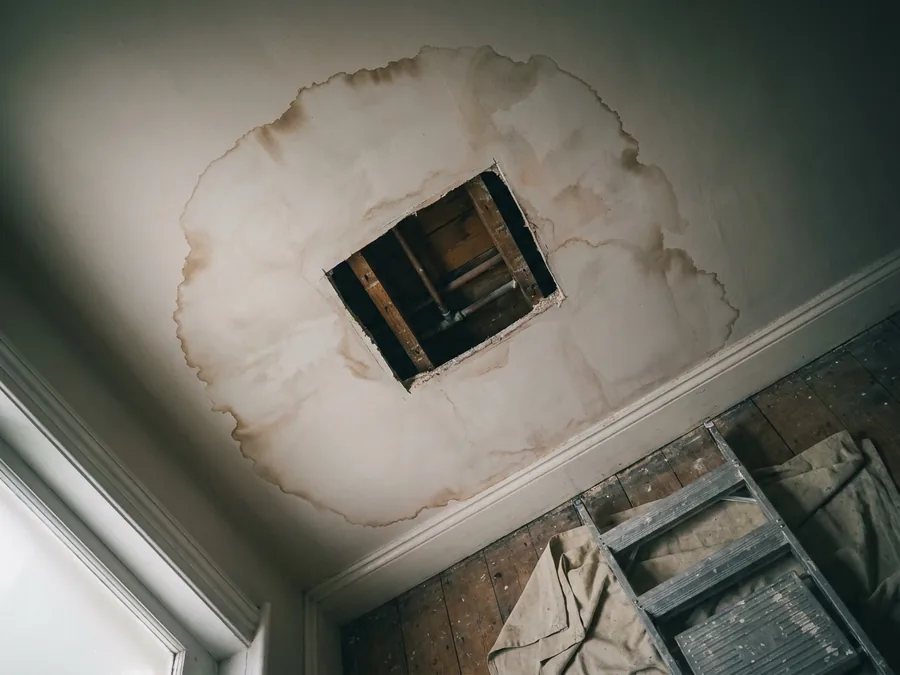
The rebuild half, by the surface most often on the invoice. The guides do not agree, and the disagreement is the signal: the low figures are patches, the high figures are replacements.
| Surface | Published range | Source |
|---|---|---|
| Ceiling | $311–$472 per patch $325–$1,100 $450–$1,600 | Homewyse: “In May 2026 the estimated national average cost to Repair Ceiling Water Damage starts at $311 - $472 per patch” · Fixr · HomeAdvisor |
| Drywall | $275–$485 $300–$850 $1.50–$3 per sq ft to replace | Fixr (repair) · HomeAdvisor (repair) · HomeAdvisor: “Replacing drywall costs $1.50 to $3 per square foot and is recommended to minimize the chances of mold growth” |
| Floor | $200–$2,000 $200–$550 | Fixr, which splits it: vinyl $200–$1,200, tile $200–$2,000, carpet $450–$2,000, hardwood $600–$2,000 · HomeAdvisor |
| Subfloor | $250–$750 | Fixr, for a 150 sq ft area |
| Wall (all types) | $275–$2,200 | Fixr: drywall $275–$485, plaster $500–$1,000, brick $525–$1,100, cinder block $650–$1,250, wallpaper (one room) $960–$2,200 |
| Roof | $350–$1,400 $400–$1,700 | Fixr · HomeAdvisor |
Sources: Homewyse, cost to repair ceiling water damage (May 2026) · Fixr (updated January 31, 2025) · HomeAdvisor (updated Jun 17, 2026). All accessed 2026-09-17.
By room, Fixr publishes bathroom $500–$4,500, laundry room $1,000–$5,500, living room $1,500–$6,000, kitchen $1,750–$8,000 and basement $2,000–$85,000. HomeAdvisor puts a full 120-square-foot bathroom at “as much as $3,000” and a basement at “around $500 for small leaks up to $80,000 for many feet of standing sewage water running throughout the house.” The basement range on both guides is the category table again: a clean-water seep and a sewer backup are the same room and different jobs.
The line item that shows up on day three: mold
Water damage quotes often carry a mold line, and it is frequently the largest single number. HomeGuide states it plainly: “Mold remediation costs $15 to $30 per square foot or $1,500 to $15,000+ total and is the most expensive and critical step of the restoration process after water damage.” HomeAdvisor: “Removing mold costs around $1,100 to $3,400, with an average price of $2,225.”
Sources: HomeGuide (2026) · HomeAdvisor (updated Jun 17, 2026). Accessed 2026-09-17.
Whether that line belongs on your quote depends on one thing the EPA is specific about: time. “It is important to dry water-damaged areas and items within 24-48 hours to prevent mold growth.” Materials dried inside that window generally do not need a mold line. Materials that stayed wet for a week do. So the mold charge is a fair question to ask about, and the answer should be a date. What EPA and FEMA say happens in the first 48 hours, and what mold remediation should cost on its own.
Source: EPA, A Brief Guide to Mold, Moisture and Your Home, accessed 2026-09-17.
If mold is in scope in Texas, the remediation is licensed work above 25 contiguous square feet, and the company doing it should appear in the state register.
Will insurance pay for it?
Sometimes, and the deciding word is sudden. The Texas Department of Insurance: “Most homeowner and renters policies cover sudden and accidental water damage.” Its examples are “a burst pipe, toilet overflow, or broken washer hose.” The same page draws the other line: “Most home policies don't cover water damage from gradual leaks or seepage, and that includes damage from mold.” Floods are a separate policy. The full rule, what a claim needs and why claims are denied are on our insurance page.
Source: Texas Department of Insurance, When are water damage and mold covered by insurance? (last updated 4/24/2025), accessed 2026-09-17.
How to read a water damage quote
Five things should be on the page. If one is missing, that is the question to ask before the number.
- The water category, in writing. Category 1, 2 or 3, and why. This sets the rate and decides what gets discarded. A storm leak priced as Category 3 without an inspection finding is exactly what the March 2026 position statement above warns against.
- The wet area, in square feet. The per-square-foot rate means nothing without it, and it is the number you can check with a tape measure.
- Mitigation and rebuild as separate totals. So you can compare the drying line against the bands on this page, and bid the rebuild separately if you want to.
- A drying log. Moisture readings by date until dry. This is the proof of completion, and the thing that tells you whether a mold line is justified.
- Who fixes the source. Named, even if it is another trade. Drying a house with the leak still running is a repeat purchase.
Multiple quotes matter more here than in most home repairs, because the spread between them tells you how much is scope and how much is urgency pricing. A quote that arrives with a category, an area, two totals and a drying plan can be compared to the bands above. A quote that arrives as one number cannot be compared to anything.
Common questions
What is the difference between category 2 and category 3 water damage?
The categories come from the ANSI/IICRC S500 standard (5th edition, 2021) and describe how contaminated the water is, not how much of it there is. Category 1 is water from a sanitary source, such as a supply line. Category 2 is water carrying significant contamination, such as a washing-machine discharge. Category 3 is water the standard calls grossly contaminated: it can contain pathogenic, toxigenic or other harmful agents and can cause significant adverse reactions to humans if contacted or consumed. Sewage and rising floodwater are the usual examples. The category sets the per-square-foot rate and decides what gets thrown away rather than dried.
Is a water damage restoration cost calculator accurate?
Only as accurate as the inputs it asks for. A calculator that does not ask the water category, how long materials stayed wet, and whether the price covers rebuild as well as drying is returning a national average with your zip code stamped on it. The published bands on this page already show a spread of roughly $1,200 to $6,400 for a typical job; a calculator cannot narrow that without knowing which of those things applies to your house.
What does water damage restoration cost per square foot?
Three guides publish a rate and they meter different things. HomeAdvisor: $3.50 to $7.50 per square foot depending on the water category (updated Jun 17, 2026). Fixr: $3.75 to $7.50, split clean, gray and black (updated January 31, 2025). HomeGuide: $4 to $12 per square foot for removing water and drying the area (2026). All three rates cover extraction and drying only. Repairing what the water ruined is priced separately, by material.
How can you tell if water damage is permanent?
No agency publishes a test for it, so be careful with anyone who says they can tell by looking. What the EPA does say is which materials are unlikely to come back: “Absorbent or porous materials, such as ceiling tiles and carpet, may have to be thrown away if they become moldy.” Hard, non-porous surfaces generally dry and clean.
The honest measurement is a moisture reading taken over several days, which is what a drying log records. Warping, delamination and a musty smell that persists after drying are signs the material is past saving. Source: EPA, A Brief Guide to Mold, Moisture and Your Home, accessed 2026-09-17.
Do I need a restoration company for a small leak?
Often not. The EPA's guidance: “If wet or damp materials or areas are dried 24-48 hours after a leak or spill happens, in most cases mold will not grow.” A small clean-water leak caught quickly, with the source fixed and the area dried inside that window, is a cleanup rather than a restoration project.
What changes the answer is contaminated water, a lot of water, or materials that stayed wet past the window. What happens in the first 48 hours, per EPA and FEMA.